



20251121
IP Provider vs Geolocation Provider: What’s the Difference and Why It Matters for iGaming Operators
GeoLocs Team
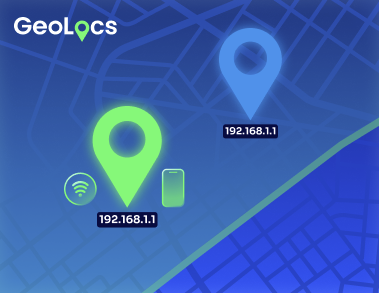
In the rapidly evolving world of online gaming and regulated markets, understanding the difference between an IP provider and a geolocation provider is essential. While these terms are often used interchangeably, they serve very different purposes and choosing the right solution can impact compliance, player experience, and business intelligence.
What Is an IP Provider?
An IP provider identifies the location of a device based on its IP address. IP addresses are numerical labels assigned to every device connected to the internet. By checking the IP address, these providers can estimate a user’s country, region, or city.
Key benefits of IP providers:
- Quick and easy to implement.
- Provides a general geographic location.
- Useful for content localisation (e.g., displaying the correct language or currency).
Limitations:
- IP-based locations is an inferred database that may not be up to date or accurate. VPNs and proxies can easily bypass restrictions.
- Cannot guarantee compliance in highly regulated markets, such as the UK, Canada, Brazil or the US.
- Offers limited insight for marketing, analytics, or fraud prevention.
In short, IP providers are great for basic geographic targeting but fall short when precise location verification is required.
What Is a Geolocation Provider?
A geolocation provider uses multiple data points such as GPS, Wi-Fi signals, cell towers, and IP addresses, to pinpoint a user’s exact location in real-time. Unlike IP providers, geolocation providers are designed with compliance and regulation in mind, making them essential for online gambling and betting operators.
Key benefits of geolocation providers:
- Accurate verification of player location for compliance.
- Ability to enforce geofencing in regulated markets.
- Supports marketing campaigns tailored to specific regions.
- Provides actionable insights for operators, such as player behaviour patterns by location.
Limitations:
- Implementation can be more complex than IP-based solutions.
- Requires player permission for location tracking.
IP Provider vs Geolocation Provider: Key Differences
The differences between an IP provider and a geolocation provider go far beyond technology, they determine how accurately and reliably an operator can identify where their players are.
An IP provider relies solely on a user’s IP address to determine location. This typically provides only a inferred estimate, often limited to the user’s country or, at best, their city. While this can be useful for content localisation or marketing, it offers little protection against players using VPNs or proxies to disguise their true location. Compliance with regulated market requirements is therefore extremely limited, and it’s easy for users to bypass these checks.
A geolocation provider, on the other hand, uses a combination of data sources—including GPS, Wi-Fi, mobile networks, and IP address to pinpoint a player’s exact location in real time. This multi-layered approach delivers much higher accuracy and ensures that operators meet strict regulatory requirements.
Beyond compliance, a geolocation solution like GeoLocs also enhances the player experience. By requesting permission and verifying a user’s location seamlessly, it enables faster, more reliable access for players in approved regions while blocking those outside permitted boundaries.
For regulated iGaming operators, these differences aren’t just technical, they’re business-critical. Using IP verification alone can put your licence and reputation at risk, while partnering with a trusted geolocation provider ensures your operations remain compliant, secure, and player-friendly.
Why GeoLocs Is iGaming’s Geolocation Provider of Choice
GeoLocs stands out in the industry thanks to its combination of accuracy, speed, and scalability:
- Rapid integration: Get up and running in under a week.
- High volume capability: Handles 10+ billion geo-checks per year.
- Industry-leading success rate
- Regulatory compliance: Trusted in multiple regulated markets worldwide, including the UK, Brazil, Canada, and the US.
- Player-first approach: Seamless experience that respects privacy while delivering precise geolocation.
These USPs mean operators can rely on GeoLocs not just to meet compliance requirements, but also to enhance player experience, prevent fraud, and enable smarter marketing decisions.
Final Thoughts
While IP providers still have a role in content localisation and simple targeting, geolocation providers are essential for operators in regulated markets. Accuracy, compliance, and actionable insights are no longer optional, they are critical to growth and sustainability in online gambling.
With GeoLocs, operators gain more than a location check, they gain a fast, reliable, and scalable geolocation platform that keeps players safe, markets compliant, and operations efficient.